
A Culture of Reliability: How Spartakus Helped Save Christmas
/
read

It all started in early October 2025, with a phone call no one in the office expected.
An unfamiliar number flashed on the screen, tagged with a strange area code: (907). Alaska? A prank? A wrong number?
But the moment we picked up, something felt… oddly familiar.
The voice on the other end carried a warmth— an unmistakable mix of cheer and authority. Without questioning who it might be, we answered every inquiry from this mysterious prospect, who, after a brief pause, calmly announced he was ready to sign.
There was only one catch: we had to act fast—his deadline was approaching faster than a runaway sleigh.
It wasn’t until our first virtual meeting that the truth hit us like a snowball in the face.
Our new client was none other than Santa Claus himself.
Leadership for Reliability
As with any large-scale initiative, the first step was to define clear objectives and guiding principles for the project. That is why our team began by traveling to the North Pole—though, for confidentiality reasons, we are strictly forbidden from sharing the exact address. Upon arrival, we held a strategic session with Santa Claus himself and a select group of his most experienced Elves.
During this strategic session, we collaborated to develop a concrete action plan outlining the key steps required to achieve the ultimate objective:
Ensuring every gift reaches its destination on December 24th.

Following the creation of this action plan, several foundational elements needed to be established:
- Create a long-term reliability vision and mission
- Define individual and team objectives
- Appoint a Reliability & Asset Management Champion
- Integrate Santa’s Elf-style change management to ensure program success
Once these components were in place, the North Pole team quickly embraced the initiative. Their motivation to adopt this new culture of reliability was as strong as Santa’s annual cocoa supply.
With alignment secured and leadership energized, we moved confidently to the next major milestone: The Reliability Assessment.
The Reliability Assessment
Over the course of a nine-day reliability assessment, our team reviewed the North Pole’s existing practices and benchmarked them against globally recognized industry standards. Across the various operational areas we analyzed, several key issues emerged, some expected, others… uniquely North-Pole-specific.

The asset master data was extremely rudimentary. For instance, in their CMMS, the children’s toy fabricator, the conveyor, and the gift-wrapping machine were all grouped and treated as a single asset. This oversimplified hierarchy made it nearly impossible to track performance or plan maintenance effectively.
To monitor equipment condition, the elves continued using the same methods they had relied on since 1864, when the “new workshop” was inaugurated. Their inspections were recorded by carving notes with sharpened candy canes onto blocks of ice.
This made it nearly impossible to maintain a consolidated view of asset health, let alone compare data year-over-year (especially since the notes were stored in a heated office…).
No standardization had ever been applied, leaving the inventory in complete disorder. Some parts were stocked three or four times over, while others had rusted after decades of neglect. Adding to the confusion, the lack of naming conventions led to constant duplicates, as each elf spelled part names according to personal whim.
These concepts were completely unfamiliar to the team. When equipment failed, elves simply replaced the broken component. For example, the motor for Santa’s sleigh-garage door was failing once a month. Instead of investigating the source of the problem, the team just kept installing new motors, creating the world’s least festive recurring expense.
Precision Maintenance
There was no formal training program. All knowledge was passed down orally from elder elves to new recruits. While charming, this approach led to inconsistent skills and limited technical development.
Leadership for Reliability
No continuous improvement program existed, and reliability principles were not actively promoted by leadership. Many supervisory elves were simply long-time workers who had never received managerial training. The prevailing mindset was, “We’ve always done it this way, and it works well enough.”
Maintenance Strategies & Asset Health
This stage marked the moment when we finally tackled the real reason Santa had reached out to us. After decades of relying on festive intuition, Christmas magic, and a surprising amount of duct tape, the North Pole needed structured maintenance strategies to secure the future of global gift delivery.
So we rolled up our sleeves (and borrowed a few pairs of Elf-sized safety goggles) to build a modern, data-driven reliability program.
Here’s how we transformed Santa’s workshop into a state-of-the-art asset management operation.

Our first mission was to establish criticality: not all assets in the North Pole are created equal. For example, the Sleigh Launch Door is significantly more critical than the Decorative Gumdrop Polisher.
We completed a North-Pole-wide Preventive Maintenance Optimization (PMO) initiative while ranking each asset according to its contribution to Christmas success.
This allowed us to:
- Identify failure modes that had gone unnoticed for centuries
- Eliminate unnecessary tasks (like polishing the conveyor belts “for shine”)
- Add essential tasks that somehow had never existed (like lubrication schedules or torque checks)
The elves were surprised to discover that “listening for weird noises” does not count as a fully optimized PM program.
Implementing Technologies
Next, we introduced modern technologies to monitor asset condition, much to the amazement of elves who believed vibration analysis was “a form of elf magic we weren’t supposed to use without permission.”
Depending on how critical the equipment was, we added tools such as:
- Vibration Analysis for rotating assets
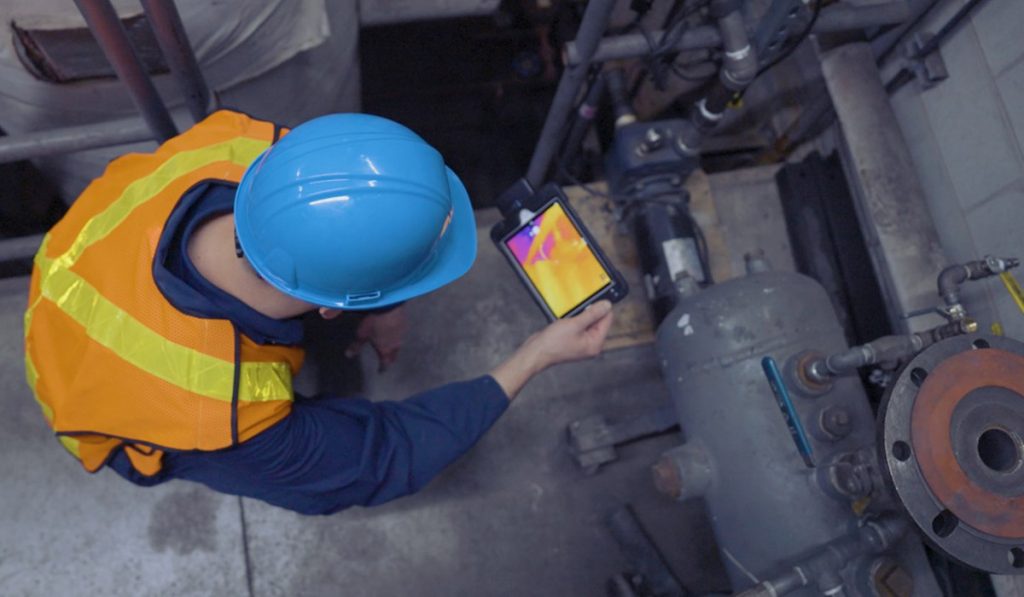
- Thermography to detect overheating sleigh engines and gift-wrapping rollers
- Ultrasound tools to identify leaks in compressed air systems (and, unintentionally, locate elves whispering secrets during night shifts)
- Oil Analysis to detect wear, contamination, and early signs of equipment distress
For the first time in North Pole history, elves could detect issues before smoke or snowflakes, started coming out of machinery.
Building an Asset Health Dashboard through Spartakus APM
To bring all this new information together, we built a comprehensive asset health dashboard in Spartakus APM.
This dashboard centralized:
- Predictive maintenance data (PdM)
- Preventive maintenance plans (PM)
- Lubrication routes
- Operator rounds
- Asset condition indicators
In other words, it replaced the need for candy-cane notes, melted ice blocks, and “Elf Memory Version 1.0.”
From now on, Santa and his team had real-time visibility into the health of every asset, from the Nutcracker Assembly Line to the Reindeer Treadmill Conditioning Unit.
Competency Development
Even with modern tools and a brand-new reliability framework, one thing quickly became clear: the success of the program would depend on the skills of the elves operating and maintaining the equipment. While their creativity, enthusiasm, and generous cocoa consumption habits were impressive, their technical competencies needed to be brought into the 21st century.
So, we set out to build a structured, future-proof competency development program that would empower every elf.

Competency Matrix & Training Plans
We created a competency matrix for maintenance and operations elves, giving Santa’s workshop its first clear view of each elf’s skills, and who needed technical development versus stronger glasses.
From this, we built targeted training plans to address skill gaps and support the new reliability culture. Some elves even discovered unexpected talent in vibration analysis, while others learned that “expert gift wrapping” doesn’t count as a lubrication skill.
Creating Maintenance Manuals, Procedures, and Standards
We then created a full suite of documentation (maintenance manuals, procedures, and standardized work instructions) to bring consistency to workshop operations.
Gone were the days of “Elf-choice maintenance methods,” where each task was done differently depending on which elf was on shift and how much hot chocolate they’d consumed.
Establishing Precision Maintenance
To elevate the quality of work, we introduced precision maintenance principles, ensuring:
- Proper torqueing
- Correct alignment
- Optimal lubrication quantities
- Proper installation and handling of components
This drastically reduced equipment failures and eliminated the long-held workshop myth that “machines break because they get tired before Christmas.”
Training Leadership in Asset Management & Reliability
We didn’t stop at the workshop floor.
North Pole management had to follow our Reliability Workshop for Executive. They explored key concepts such as:
- Reliability as a business strategy: why Reliable Manufacturing boosts profitability, safety, and sustainability.
- Maximizing facility reliability: how equipment really fails, and why proactive strategies—like condition monitoring and Precision Maintenance.
- Using asset health data: turning insights from tools like Spartakus APM into smarter decisions, stronger KPIs, and better OEE.
- Self-assessment and improvement planning: evaluating current practices and building a clear roadmap toward world-class reliability.
Lubrication Program Review & Best Practices
Finally, we reviewed and upgraded the entire lubrication program, including:
- Lubricant selection
- Storage and contamination control
- Handling procedures
- Lubrication intervals and quantities
We replaced outdated practices like “adding more grease until the squeaking stops” with scientifically validated methods.
Conclusion
As our time at the North Pole came to an end, something remarkable happened.
Between the hum of modernized machines, the glow of control screens, and the distant jingling of reindeer bells, we realized that this project had become more than a mission in reliability, it had become a reminder of what makes Santa’s workshop truly extraordinary.
Yes, we brought tools, methods, and expertise.
But the magic?
The magic was already there, in the dedication of the elves, in Santa’s unwavering belief in possibility, and in the shared commitment to ensuring that joy reaches every home on a single, star-filled night.
On our last evening, as we watched the Northern Lights dance above the workshop, Santa told us something we won’t soon forget:
“Reliability isn’t just about machines—it’s about the culture and keeping promises.
And Christmas is the biggest promise of all.”
Mery Christmas From Spartakus!
Raphael Tremblay,
Spartakus Technologies
[email protected]