
APM Reliability: Core Features And What’s Not an APM
/
read

Cutting Through the Confusion Around Asset Performance Management
Over the last few years, the term “APM” has been applied to everything from dashboards to digital twins to basic sensor platforms. The result? A lot of confusion. Teams often find themselves investing in solutions that check some boxes, but ultimately fall short of delivering real value.
Much of this confusion is driven by digital transformation, as organizations adopt new digital technologies that rapidly evolve.
This article is here to clear things up. We’ll define what a true Asset Performance Management software is, explain what it isn’t, and show why understanding the difference is critical if you’re serious about building a reliable, high-performing operation.
What Is an APM?
Asset Performance Management (APM) involves using data and technology to monitor the health, performance, and risk of physical assets throughout their lifecycle. The goal is simple: make better decisions that keep equipment running, reduce failures, and maximize value. APM helps organizations manage asset risk and prevent asset failures, which is essential for critical infrastructure where reliability and safety are paramount.
Where traditional maintenance systems focus on tracking work orders or collecting data, APM connects the dots. It turns raw information into actionable insights, empowering maintenance optimization, reliability, and operations teams to move from reactive firefighting to proactive, risk-informed strategies. This marks a significant shift from traditional asset management practices to advanced risk management and asset risk management approaches that proactively address asset failure and operational risks.
As described in Spartakus’ guide on APML, an APM solutions help address the key aspects of asset performance management:
- Align asset performance with business goals and maintenance analytics
- Support root cause analysis, continuous improvement and maintenance strategy development
- Provide early warnings of degradation or risk
- Drive collaboration across departments through shared visibility and maintenance KPIs
APM solutions are designed to improve reliability and enhance performance across operations by reducing asset failures and supporting effective risk management.
In other words, an APM is not just about keeping machines running. It’s about keeping the business running smarter.
Core Capabilities of an APM
Let’s break down the essential components of an effective APM platform. If a solution is missing one or more of these, it likely won’t deliver the value you expect. But keep in mind that some APM offer way more than that, it all depend on what you actually need.
1. Asset Health Monitoring
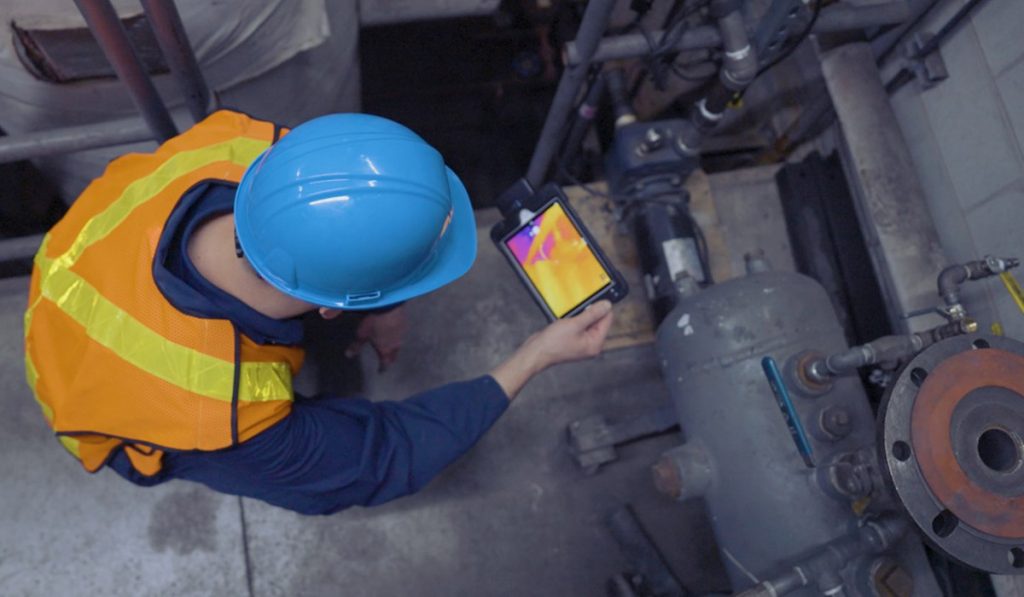
This is the backbone of APM, real-time or near-real-time visibility into the current state of your industrial asset. With dashboards that track vibration, temperature, pressure, and other condition indicators, teams can quickly spot emerging and prioritize risk-based maintenance.
Imagine a critical pump that starts running hotter than normal. An APM with some good condition monitoring detects this subtle shift, flags it on the dashboard, and ties it to a recommended action.
2. Risk-Based Decision-Making
Not all assets are equal, and not all failures carry the same consequences. That’s why an effective APM system should support Asset Criticality Ranking (ACR), a method of classifying equipment based on its criticality in production line. This enables you to prioritize decisions based on actual risk: the likelihood of asset failure and its potential consequences on safety, production, or cost. Analyzing each failure mode is essential to inform risk-based decisions and optimize maintenance strategies.
3. Condition Monitoring
This refers to the use of technologies like vibration analysis, infrared thermography, ultrasound, and oil analysis to evaluate asset condition over time. Condition monitoring helps detect early signs of equipment failure and asset failures, enabling teams to take action to minimize downtime. An APM is not a predictive maintenance tool, but it brings all the condition monitoring data streams together, analyzes trends, and alerts you to patterns that might indicate a failure in the making. Analyzing failure mode is a key part of interpreting condition monitoring data to prevent asset failures and optimize reliability.
4. Performance Tracking with KPIs
You can’t improve what you don’t measure. APM should enable you to track key metrics and key performance indicators (KPIs) that matter most to your business. By monitoring these key metrics, organizations can realize key benefits such as the ability to enhance performance and reduce costs. Whether your focus is risk assessment, data-driven maintenance, cost, efficiency, or compliance, the right system should give you the visibility to monitor what truly drives performance.
5. Support for Strategy Development
A true APM platform doesn’t just detect issues, it helps build smarter strategies by supporting maintenance planning and strategy development. By analyzing asset history, failure modes, and performance patterns, an APM software should support the creation and refinement of Preventive maintenance, PM optimization, and PdM plans. Understanding each failure mode is critical for developing effective strategies. APM platforms also support reliability centered maintenance and risk based inspection methodologies, enabling systematic, data-driven approaches to optimize asset performance and reduce unplanned downtime.
6. ERP systems, EAM and CMMS Integration
No one wants another data silo. An APM system should be designed to complement, not replace, your CMMS, ERP, or EAM system integration. By integrating with these platforms, the APM ensures that data flows freely, so insights become actions (like triggering a work order) without manual duplication. Integration with control systems is also important, as it enables comprehensive data flow from physical assets and machinery for more effective asset performance analysis.
7. Dashboards for Visibility
Finally, an APM isn’t helpful unless people can understand and act on the information it provides. A good APM solution should offers intuitive dashboards that bring together technical, operational, and strategic data, customizable for different users, from technicians to executives.
Artificial Intelligence and Asset Reliability
Artificial intelligence (AI) and machine learning are rapidly transforming asset performance management, ushering in a new era of predictive maintenance and data-driven reliability. Modern apm systems leverage AI to process vast streams of sensor data, maintenance records, and operational metrics, uncovering patterns and anomalies that would be impossible to detect manually.
With AI-powered analytics, organizations can predict equipment failures faster, enabling proactive maintenance strategies that minimize downtime and reduce maintenance costs. Machine learning algorithms continuously refine their models based on new data, improving the accuracy of failure predictions and helping teams optimize maintenance schedules. This not only extends asset lifecycles but also enhances asset reliability and business performance by reducing risk exposure and preventing costly equipment failures.
To learn more about AI in reliability, download this white paper :
What Is Not an APM?
Let’s be clear, just because a tool collects data from assets doesn’t mean it’s managing asset performance. Many of these tools are rooted in traditional asset management practices and may not fully leverage the benefits of digital transformation, which integrates advanced technologies like IoT, AI, and machine learning to optimize asset reliability and efficiency.
Here are a few common tools often mistaken for APM:
- CMMS (Computerized Maintenance Management Systems): CMMS platforms are vital for planning and tracking maintenance activities. But they’re not designed to monitor asset health or optimize performance, they’re recordkeeping and scheduling tools.
- Sensor Data Platforms: These tools collect valuable real-time data. But without analytics, thresholds, and strategy alignment, they don’t tell you what to do with that data, or why it matters.
- BI Dashboards: Business Intelligence tools like Power BI or Tableau help visualize data. But they don’t generate insights around risk, reliability, or failure patterns on their own. They need an underlying model, like APM, to drive meaningful interpretation.
- Digital Twins (on their own): A digital twin replicates the behavior of a physical asset. But it’s a building block, not a strategy. Without integration, analytics, and strategy support, a digital twin and APM are not the same thing.
Why the Distinction Matters
If you’ve ever implemented a solution that promised results, but ended up underused or misunderstood, you already know why this matters.
Choosing a solution that isn’t truly an APM leads to:
- Tool overload: Too many disconnected systems, with teams unsure where to look for answers
- Missed opportunities: No early warnings, no performance insights, no risk-based action
- Disappointment: Leaders expect transformation but get another dashboard no one checks
The key benefits of a true APM include minimizing downtime, reducing costs, and extending asset lifespan, delivering real value by optimizing asset performance and reliability.
An APM is not about layering on more tools. It’s about enabling a culture shift, from reactive, event-driven maintenance to a proactive, performance-centered mindset.
When implemented properly, APM helps you:
- Detect potential failure early and lower risk of failure
- Extend asset life
- Reduce total cost of ownership
- Improve safety and compliance
- Align maintenance plan with business priorities
In an industry where every hour of downtime counts, you can’t afford to be confused about what your tools actually do.
Not all platforms marketed as APMs are created equal. Some may have partial features, but lack the intelligence or strategy needed to truly manage performance.
By understanding what APM is, and just as importantly, what it’s not, you’re in a stronger position to make decisions that deliver real results. Whether you’re starting your reliability journey or optimizing an existing program, a true APM platform can be the foundation of long-term operational excellence.
Frequently Asked Questions (FAQ)
Do I need an APM if I have a CMMS?
Yes. A CMMS helps manage tasks and track asset history, but it doesn’t offer the analytics, monitoring, or risk insights needed for performance optimization or comprehensive risk management.
Is an APM only for predictive maintenance?
No. An APM supports a full range of strategies, including preventive, predictive, and condition-based maintenance—and helps refine them over time based on actual performance data and key metrics.
How do I know if a solution claiming to be an APM is actually one?
Ensure that the software enables you to perform at least the following functions:
- Monitor asset health
- Make risk-based decisions and support risk management
- Conduct condition monitoring
- Track performance using KPIs and other key metrics such as equipment uptime and maintenance costs
- Support the development of maintenance strategies and effective maintenance planning
- Integrate with CMMS, ERP, or EAM systems for seamless workflow and work order management
- Provide dashboards for enhanced visibility

What departments should be involved in choosing an APM solution?
All departments should be involved in the choosing of an APM solution and the strategic session. Having insight from different point of view is necessary to make sure you maintenance strategies are align with business objectives.
Conclusion
Asset Performance Management (APM) stands as a cornerstone of modern asset management, enabling organizations to optimize asset health, performance, and risk across their operations. By harnessing the power of advanced analytics, artificial intelligence, and machine learning, APM software empowers teams to predict equipment failures, reduce maintenance costs, and improve asset reliability.
A successful APM program is built on a foundation of clear objectives, strategic software selection, and a commitment to continuous improvement. As organizations embrace new digital technologies and evolve their asset management practices, APM will play an increasingly vital role in driving operational efficiency, reducing risk, and maximizing asset availability.

Raphael Tremblay,
Spartakus Technologies
[email protected]