
How Spartakus APM Helped Kruger Crabtree Reach 90% OEE
R. Tremblay
/
read

For many in the pulp and paper industry, downtime is a constant battle and maintenance teams are the first line of defense. At Kruger Crabtree, a major North American paper mill, this battle used to be a way of life, complete with unpredictable breakdowns, late-night emergency calls, and constant pressure to keep production running.
Over the past eight years, that reality has shifted dramatically. Today, the mill operates with fewer emergencies, higher reliability, and a calmer, more predictable work environment.

2017
Less than
75% OEE

2025
Over
90% OEE
The transformation didn’t happen overnight, nor was it the result of a single tool, it was a combination of leadership vision, process changes, team engagement, supported by Spartakus APM software.
This is the story of how Kruger Crabtree reached an OEE of 90% and reduced NBDT to 3.5%, while also enhancing employees’ quality of life.
About Kruger
Kruger has been a leader in the pulp and paper industry since 1904, with operations across North America.
The Crabtree facility is one of its flagship mills, housing four paper machines and thirteen converting lines. With around 600 employees working rotating shifts 24/7, it is a complex operation where machinery, processes, and people must work in perfect harmony.
Jean-François Noël, the Technical Director at Kruger Crabtree, is responsible for keeping that harmony intact. By 2017, he and his team were facing challenges that spreadsheets, manual reports, and scattered data systems could no longer solve.

Life Before the Transformation
Back in 2017, the maintenance environment at Kruger Crabtree was reactive by necessity. Teams were constantly responding to failures instead of preventing them.
Some of the biggest challenges included:
Frequent unplanned downtime, disrupting schedules and increasing production costs.
No centralized maintenance platform, leading to siloed data and misaligned decision-making.
Scattered information on asset health, making it nearly impossible to get a complete, real-time view of operations.
KPIs that were unreliable or hard to track, limiting the ability to measure progress.
The human cost was significant. Supervisors were receiving calls in the middle of the night several times a week. Maintenance teams often had to drop everything to deal with an urgent breakdown. Operators felt the pressure of interrupted runs and production slowdowns.
The team was putting out fires almost every week. The constant stress made it difficult to plan a day (let alone a life) when no one knew what would break next.
The Decision to Change
The tipping point came when unplanned stoppages became too frequent to manage effectively. While working with Laurentide Controle, their maintenance and reliability engineering firm, Kruger Crabtree was introduced to Spartakus APM, an asset performance management platform that could bring all reliability process and data implemented by Laurentide Control under one roof.
Since their Oil analysis data was already being fed into the platform, the team decided to move forward, seeing Spartakus APM not as a silver bullet, but as a stepping stone for building a new, proactive maintenance strategy.
Implementation and Evolution
Rolling out the new approach wasn’t just about installing software. It meant changing mindsets, training teams, and rethinking processes.
Key steps included:
- Training operators and maintenance crews to use the platform and trust its data.
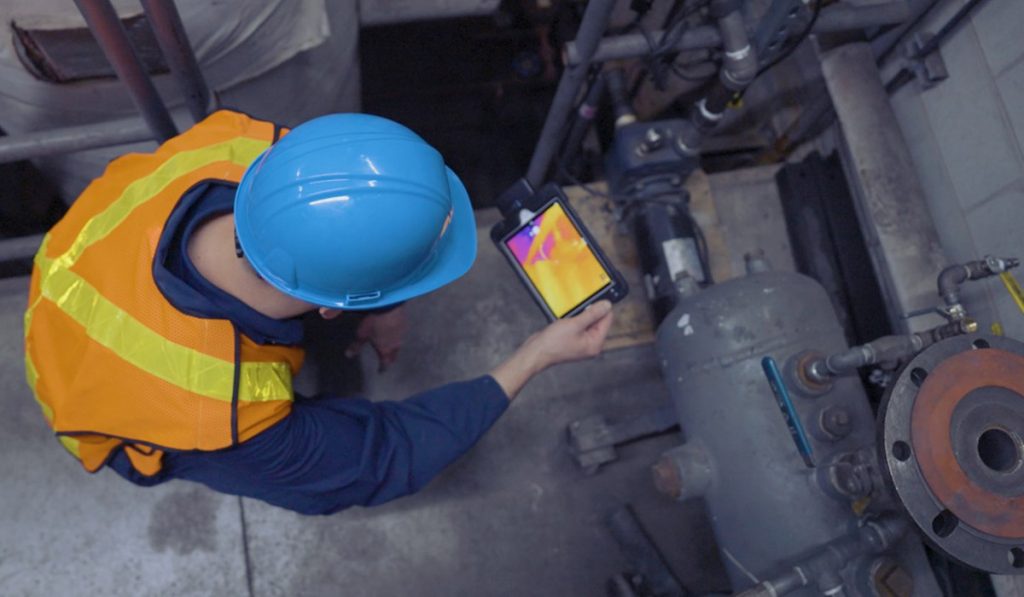
- Integrating multiple predictive tools, vibration analysis, oil analysis, and thermography, into one dashboard.
- Digitizing operator rounds, ensuring consistent and traceable inspections.
- Adding monitoring for critical components such as control valves, safety valves, and pressurized tanks.
Over time, Kruger Crabtree adopted nearly every module of the platform. More importantly, they aligned their processes so that technology supported human expertise.
The Results in Numbers
The changes paid off, and the numbers prove it.


This meant more production, fewer last-minute emergencies, and a more predictable work schedule for everyone. The improvement in OEE alone meant over 25hours of uptime per week.
The Human Transformation
Two years into the change, the results went beyond metrics. The culture shifted from firefighting to foresight. Roles and responsibilities became clearer. Teams could focus on strategic improvements rather than scrambling to fix breakdowns.
Maintenance is about doing the right job, at the right time, with the right tools, and the right people. With Spartakus APM, we can now achieve that consistently, and it has made all the difference.
The most noticeable change was in work-life balance:
- Supervisors no longer get emergency calls multiple nights a week.
- Operators aren’t constantly pulled from tasks to deal with unexpected breakdowns.
- Maintenance teams have time to plan their work and perform it safely.
The mill is running more smoothly, the work is more organized, and people can leave at the end of their shift without wondering what crisis will happen next.
Better Maintenance, Better Life: The Kruger Crabtree Way
Kruger Crabtree’s story shows that operational performance and employee well-being are not competing goals, they are deeply connected. By combining leadership commitment, process improvements, team engagement, and modern APM software, the mill achieved measurable gains in production while giving its teams a better quality of life.
In an industry where uptime is everything, Kruger Crabtree has proven that stability, safety, and peace of mind are just as valuable as the tons of paper leaving the mill each day.
Raphael Tremblay,
Spartakus Technologies
[email protected]