

Top 5 elements to consider for your lubrication program
/
read
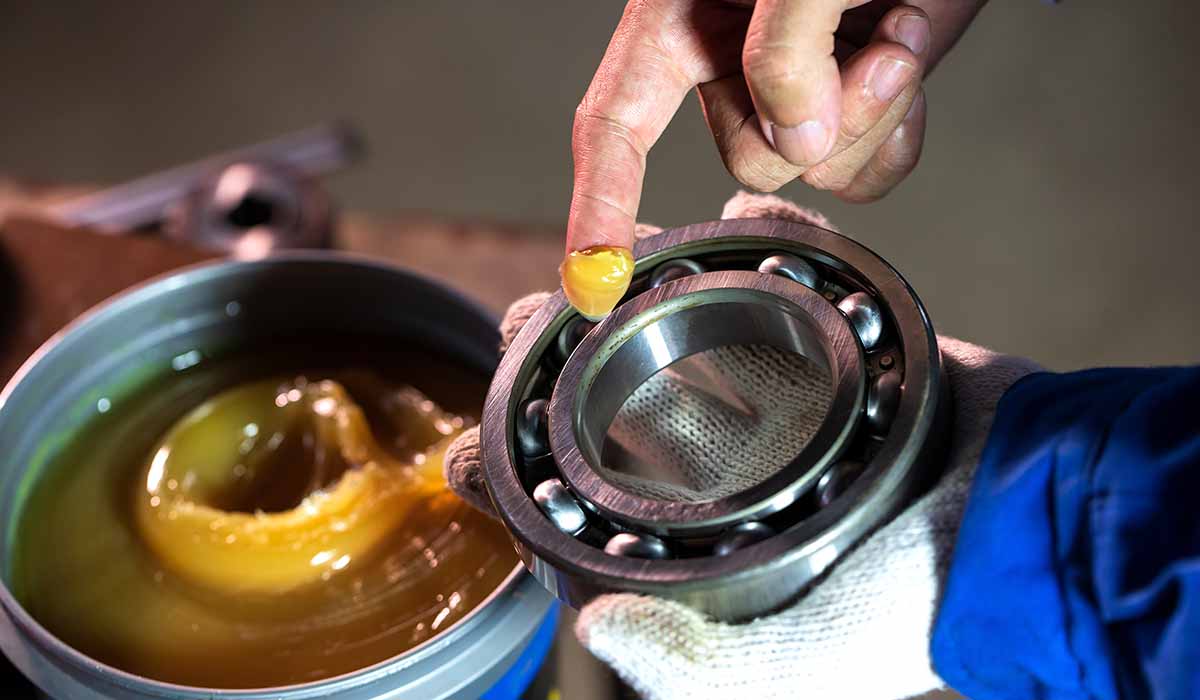
Why does my lubrication program need the appropriate frequencies, quantities, type of lubricants and procedure?
Several studies1 and case studies have shown that approximately 80% of bearing failures are directly related to lubrication issues. Proper lubrication is indeed a critical aspect of your preventive maintenance program if you are expecting to have reliable operation throughout your plant.
Proper lubrication is essential for equipment reliability and long-term plant performance.
When the lubrication program is neglected or not done correctly, it can lead to multiple issues and eventually, catastrophic failure. Note that the exact percentage of mechanical failure due to lubrication may vary depending on your industry, type of equipments and other factors. A well-managed lubrication program is like regular health checkups for your assets, helping to keep machinery healthy and performing at its best.
Even though the 80% might not be the exact number for your reality, this statistic still illustrates the importance of an accurate lubrication program and how it can easily address a significant amount of potential failure, which will directly result in your plant’s reliability and performance. Effective lubrication management plays a crucial role in preventing failures and ensuring plant reliability.
Why is a significant amount of mechanical failure due to lubrication?
Lubrication plays a key role in preventing wear and tear, reducing friction, dissipating heat, and ultimately, ensuring an overall smooth operation between any moving parts on your assets.
That being said, considering that lubrication serves a pivotal role to the functioning of mechanical parts in motion, any inaccuracies in the lubrication process, such as applying the incorrect lubricant or the wrong type of grease between two moving parts, can quickly result in issues and failures, including reduced equipment lifespan and increased failure rates.
This is why it is commonly stated that 80% of failures are attributed to lubrication issues because moving parts directly involve friction, heat and wear; therefore, any inaccuracies in the lubrication program will directly affect the asset’s health. Improper lubrication can also lead to seal damage, which may cause leaks and further equipment issues. On the other hand, if you have an accurate lubrication program, you will easily be able to address a significant amount of potential failure!
What makes a great lubrication program for equipment reliability?
A great lubrication program is characterized by several key aspects. The five key elements we will focus on in this article are widely recognized as lubrication best practices in the industry. Effective lubrication practices are built on these foundational elements: types of lubricants, quantities, frequencies, procedures, and training. Let’s expand on each of these aspects:
1. Type of Lubricants
Choosing the right lubricants is arguably the most important parameter out of the 4. Industrial lubricants come in various types, including oils, greases, and specialty lubricants. When selecting the appropriate lubricant, several factors must be taken into consideration:

Once these variables are established, you will be able to rightfully determine the ideal viscosity you are looking for in your lubricant as well as the additives that your system requires to ensure a smooth operation and longevity of your assets.
When it comes to viscosity, this refers to the thickness of the lubricant and its resistance to motion; typically, a faster operation will require a lubricant with a lower consistency and slower operation will require a higher consistency. When it comes to additives, their role is to modify the base lubricant in a way that will be ideal for its given purpose. For high-load or extreme pressure applications, lubricants with extreme pressure additives are necessary to prevent wear and ensure durability. Additionally, selecting lubricants with corrosion inhibitors is important to protect components from moisture and environmental challenges. Indeed, additives can do 3 main things:
-
Improve the existing base oil properties.
-
Neutralize undesirable base oil properties.
-
Introduce new properties to the base oil
There are numerous potential combinations of base oils and additives, possibly numbering in the hundreds or even thousands. This vast array of options provides multiple choices when it comes to making a selection, ensuring that you can find a suitable option to meet your specific requirements. While the manufacturer’s recommendation is a good starting point for selecting an industrial lubricant, it should not be the only option—especially if the application environment or operating conditions differ from the ideal. Consider alternative lubricants that may be better suited to your specific operational demands and the variety of components within your machinery.
2. Quantities
Calculating the correct quantities of lubricants is crucial to ensure that each component, such as bearings or other moving parts, is properly lubricated. As it will be discussed in point #4, it is highly recommended to perform ultra-sonic greasing when it comes to performing lubrication tasks, but we still recommend calculating baselines in terms of quantities for each component.
Injecting the wrong amount of lubricant can lead to both over-lubrication and under-lubrication. Over-lubrication can cause excess lubricant to accumulate, leading to a rise in operating temperature, contamination, energy wastage, and increased wear due to churning.
Under-lubrication results in insufficient lubricant protection between moving parts, leading to increased friction, heat, and wear. In both cases, it will directly affect the component’s performance and ultimately, its health.
When calculating quantities, the same factors as stated in section #1 should be taken into consideration as well as those factors:
- Position of the component or bearing (vertical/horizontal)
- Component or bearing size (outside diameter, inside diameter, bore size, etc.)
- Component or bearing features (roller, spherical, rubber seals, etc.)

When those parameters are defined, you can easily calculate the required quantity for that component. There are several formulas and calculators on the web, see which one fits the most your need.
3. Frequencies
Frequencies and quantities are inherently interconnected. Likewise, when determining quantities and lubrication intervals, you need to consider the same parameters listed in section #2. When calculating quantities and lubrication intervals, you’ll uncover the recommended/optimal lubrication combination of quantities and intervals for your equipment.
At this point, you will have a bunch of different combinations of lubrication intervals with few little similarities between all the lubrication tasks. It’s vital to align these calculations with your operational reality, this is where the need arises to establish guidelines based on available workforce and past failures.
To optimize your lubrication program, it’s advisable to select specific lubrication intervals and align your calculations with these chosen intervals. For example, your program might have lubrication intervals set at 2 weeks, 4 weeks, and 12 weeks. Real time data from equipment monitoring can help optimize lubrication intervals and improve reliability by allowing timely adjustments based on actual equipment condition.
Consequently, any calculated interval that doesn’t align with these selected lubrication intervals should be recalculated. Why is it important to establish such interval guidelines? It’s primarily to maximize available manpower. It’s more efficient to standardize tasks within a similar area to a common interval, so that resources address all equipment during the same routes, rather than revisiting the same equipment multiple times a week.
It’s worth noting that when recalculating intervals and quantities, a cross-product method can be applied to determine the new quantities for the chosen interval. Furthermore, best practices encourage shortening optimal intervals rather than extending them. For instance, in the case of a selected 2-4-12 weeks lubrication program, if a calculation recommends greasing 20g every 6 weeks, it’s more advisable to adjust it to 13g every 4 weeks rather than increasing it to 40g every 12 weeks.
Moreover, when deciding which tasks should be assigned to which specific intervals, it’s crucial to tailor this to your plant’s unique circumstances. This means that when you calculate a task’s optimal intervals and quantities, you might sometimes encounter a combination such as 10g every 40 weeks.
Keep in mind that not only a lubrication task serves the purpose of lubricating equipment, but it also gives the opportunity to have someone boots on the ground physically looking at the equipment to also look for any potential symptoms of failure.
Therefore, in a situation where the optimal interval is very large, like the example of 40 weeks, instead of scheduling someone to visit every 40 weeks, it’s more practical to have them visit at shorter intervals, apply smaller quantities of grease, and simultaneously conduct a physical examination of the equipment to identify potential signs of failure.
4. Procedures
When it comes to lubrication programs, it’s crucial to implement detailed procedures. Although lubrication may seem like a straightforward task, it actually involves complex lubrication processes that require careful management.
Regardless of the chosen lubrication method, tasks must be as objective as possible, including the number of lubrication points, quantities per point, point locations, step-by-step lubrication processes, and ideally, accompanying images to make the program foolproof.

When it comes to procedures, it’s worth noting that ultrasonic greasing stands out as the most accurate and precise lubrication practice. Ultrasonic grease guns feature ultrasonic sensors that emit ultrasonic waves, with reflected waves providing real-time feedback on the lubrication process.
That being said, you will be able to lubricate the optimal amount of grease into a bearing in order to neutralize the resulting dB waves. Therefore, this technique does not require any pre-set quantities, because the quantities will be determined according to the neutralization of the resulting waves.
However, it’s still best practice to equip the personnel with theoretical calculations as this theoretical quantity will serve as a maximum quantity for the tasks. This can help prevent over-greasing in case of ultrasonic gun issues or other malfunctions.
It’s important to recognize that various strategies exist for greasing bearings, but the key is to have detailed, objective task descriptions, potentially with photos, to minimize operator dependency.
5. Training
Closely connected to procedures is the necessity of accurate personnel training for the workforce. Even with meticulously crafted, step-by-step procedures and visual procedures, human error can still occur without proper personnel training. Consequently, it’s imperative that your workforce receives comprehensive personnel training on the tools and procedures in place. Whether it’s ultrasonic greasing or manual greasing, ensure your team is well-versed in current best practices related to lubrication.
A great lubrication program combines these four aspects to ensure that machinery and equipment are well-maintained, reliable, and efficient. It also promotes a safe working environment and can contribute to cost savings by extending the life of equipment and reducing downtime. Continuous improvement through monitoring, feedback, and adjustments is also essential for the ongoing success of the program.
Contamination Prevention: The Hidden Threat
While selecting the right lubricant and following proper procedures are essential, contamination prevention is an equally important—yet often underestimated—pillar of an effective lubrication program. In industrial settings, even the most advanced machinery lubrication strategies can be undermined by the presence of contaminants such as dirt, moisture, or other foreign particles. These contaminants can quickly compromise lubricant quality, leading to bearing failures, equipment failure, and a significant reduction in equipment life.
Contamination control should be at the forefront of your lubrication management efforts. Implementing regular oil analysis and vibration analysis allows maintenance personnel to monitor lubricant condition in real time, detect early signs of contamination, and take corrective action before minor issues escalate into unplanned downtime or catastrophic equipment failure. By maintaining clean lubricants and removing contaminants proactively, you help ensure your equipment operates at optimal performance and reliability.
Proper storage and handling of industrial lubricants and hydraulic fluids are crucial to prevent cross contamination. Always use dedicated containers and dispensing tools for each lubricant type, and store lubricants in clean, dry environments away from excessive heat or extreme conditions. Following manufacturer’s recommendations and established lubrication procedures helps maintain lubricant quality and prevents the use of incorrect lubricants, which can further exacerbate contamination risks.
Continuous improvement is key to effective lubrication management. Regularly review and update your lubrication activities and procedures based on oil analysis results, equipment performance data, and feedback from maintenance personnel. Investing in ongoing lubrication training ensures your team is equipped with the latest knowledge and best practices to prevent over lubrication, under lubrication, and contamination-related issues.
By prioritizing contamination control and integrating it into every aspect of your lubrication program, you can significantly reduce downtime, extend equipment longevity, and improve overall efficiency. Keeping lubricants clean and free from contaminants is not just a best practice—it’s a critical strategy for protecting your critical assets, maximizing operational efficiency, and ensuring the long-term health of your machinery.

Arnaud Richer, B. Eng.
Reliability solutions – Spartakus technologies
[email protected]
Reference: